


Why Do They Call Them T-Shirt Bags?
Dec 29, 2025
Quick Summary
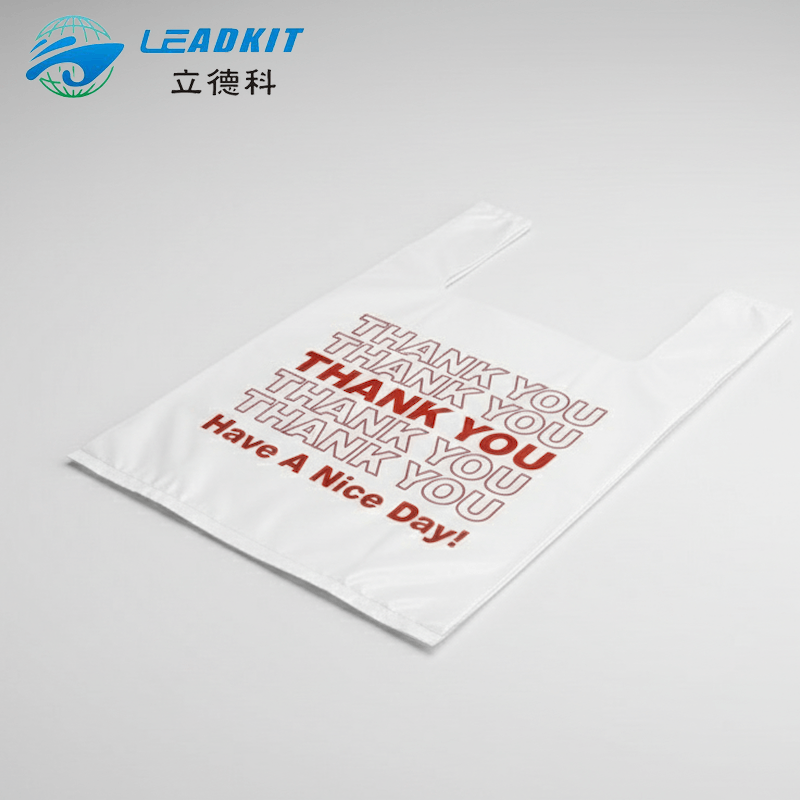
T-shirt bags get their name from their distinctive shape, which resembles a sleeveless T-shirt when laid flat. This simple design has made them one of the most widely used disposable shopping bags in supermarkets, convenience stores, and retail chains worldwide. Beyond the name, the structure of T-shirt bags explains why they remain cost-effective, easy to carry, and suitable for high-volume retail environments.
1. The Origin of the Name "T-Shirt Bags"
The term T-shirt bag is purely descriptive, not brand-related.
When the bag is unfolded and laid flat:
- The two side handles resemble short sleeves
- The central body resembles the torso of a T-shirt
This visual similarity led retailers and packaging manufacturers to adopt the term "T-shirt bag" as early as the 1970s, particularly in North American supermarket supply chains.
In some regions, they are also called:
- Vest bags
- Singlet bags
- Carrier bags with handles
However, "T-shirt bag" remains the most widely recognized term in global trade and procurement.


2. What Makes the T-Shirt Shape So Practical?
The T-shirt-style structure is not accidental-it is driven by functionality and cost efficiency.
Key structural advantages:
- Integrated handles (no extra sealing required)
- Even weight distribution when carrying groceries
- Fast dispensing at checkout counters
- Lower material usage compared to loop-handle bags
This design allows retailers to balance strength, speed, and price in high-traffic environments.
3. Common Materials Used for T-Shirt Bags
Although the name refers to shape, not material, most T-shirt bags are produced using:
HDPE (High-Density Polyethylene)
Lightweight, stiff, cost-efficient
Common in supermarkets
LDPE / LLDPE
Softer feel, higher stretch
Better for heavier or irregular loads
Recycled plastics (PCR)
Increasingly required for regulatory compliance
Biodegradable or compostable materials
Used in regulated markets
The same T-shirt design works across multiple material types.
4. Why T-Shirt Bags Became a Retail Standard
T-shirt bags dominate retail packaging because they are:
Easy to mass-produce
Compatible with automatic bag-opening racks
Space-efficient in storage
Familiar to consumers worldwide
For retailers, this translates into:
Faster checkout
Lower unit cost
Reduced training requirements for staff
Even as sustainability regulations evolve, the T-shirt bag format continues to adapt rather than disappear.


5. Are T-Shirt Bags Always Disposable?
Traditionally, T-shirt bags are considered single-use.
However, in many markets today:
- Thicker versions qualify as reusable bags
- Recycled-content versions meet legal thresholds
- Compostable versions are used where plastic bans apply
The name "T-shirt bag" describes the shape, not the bag's regulatory status.
6. T-Shirt Bags vs Other Shopping Bag Types
| Bag Type | Key Difference |
|---|---|
| T-shirt bags | Built-in handles, lightweight |
| Loop-handle bags | Separate handle attachment |
| Die-cut handle bags | Flat top handle hole |
| Paper shopping bags | Rigid structure, higher cost |
This comparison explains why T-shirt bags remain dominant in high-volume retail.
7. Why Buyers Still Use the Term "T-Shirt Bags" in Global Trade
In international sourcing, "T-shirt bags" is a standardized trade term used in:
- RFQs and purchase orders
- Customs documentation
- Product specifications
Using the correct term reduces misunderstandings between buyers and manufacturers.
8. Final Thoughts
They are called T-shirt bags because their shape mirrors a simple T-shirt-nothing more, nothing less. Yet this straightforward design has proven remarkably efficient, helping the format remain one of the most widely used retail packaging solutions in the world.
Understanding the origin of the name also helps buyers better understand why the design works, and why it continues to evolve rather than disappear.
References
- Global Retail Packaging Terminology Guide
- Supermarket Packaging Design Standards
- Plastic Carrier Bag Manufacturing Practices


