


HDPE vs LDPE T-Shirt Bags: Cost, Strength & Compliance
Jan 09, 2026
Quick Summary
HDPE and LDPE are the two most commonly used materials for T-shirt bags, but they differ significantly in cost structure, strength performance, thickness efficiency, and regulatory compliance. This guide explains how each material performs in real retail use and helps buyers choose the right option based on application, market regulations, and long-term cost control.
1. Why HDPE vs LDPE Is a Critical Buyer Decision
Many buyers assume all T-shirt bags perform similarly as long as thickness is increased. In reality, material selection impacts:
- Bag breakage rates
- Unit cost and freight cost
- Customer complaints
- Regulatory compliance
- Sustainability positioning
Choosing the wrong material often leads to hidden costs, even if the unit price looks lower.
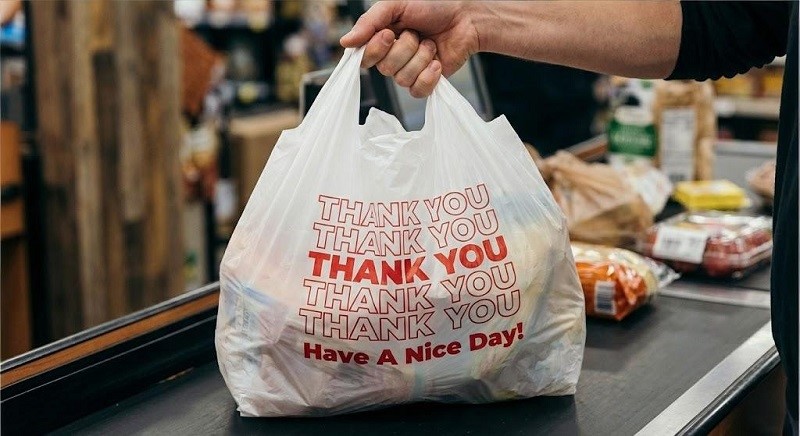
2. Material Basics: HDPE vs LDPE Explained
HDPE (High-Density Polyethylene)
- Linear molecular structure
- Lower material density
- "Crispy" texture
- Higher stiffness at lower thickness
LDPE (Low-Density Polyethylene)
- Branched molecular structure
- Softer, more elastic feel
- Higher density
- Better puncture resistance
Both materials are widely used, but serve different retail needs.
3. Cost Comparison: Unit Price vs Total Cost
HDPE T-Shirt Bags
- Lower raw material cost
- Can use thinner gauges
- Lower weight per bag
- Reduced freight costs
Best for:
High-volume supermarkets, price-sensitive markets, regulated thin-bag regions (where allowed).
LDPE T-Shirt Bags
- Higher resin cost
- Requires thicker film
- Higher weight per bag
- Slightly higher logistics cost
Best for:
Heavier goods, wet products, premium retail environments.
🔎 Buyer insight:
HDPE usually wins on per-unit cost, but LDPE can reduce breakage-related losses in heavy-load scenarios.
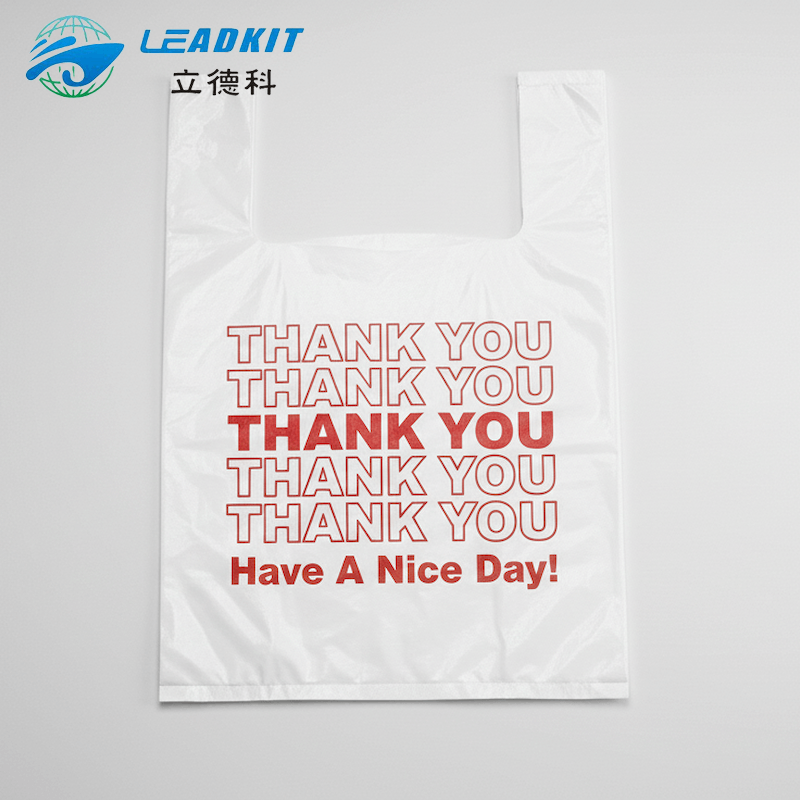

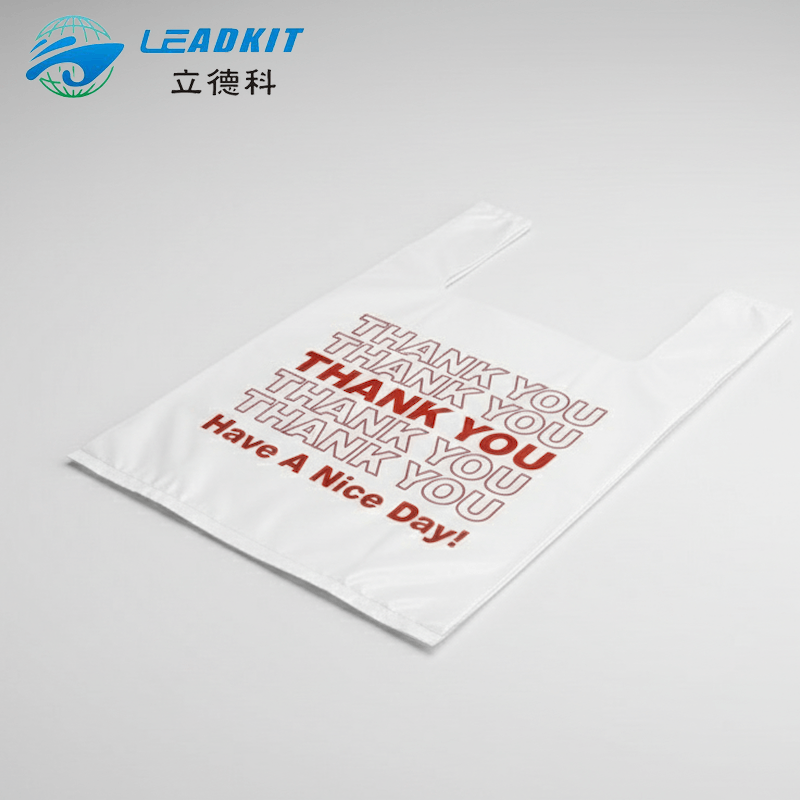
4. Strength & Performance: Thickness Is Not the Whole Story
| Performance Factor | HDPE | LDPE |
|---|---|---|
| Tensile strength | High | Medium |
| Tear resistance | Medium | High |
| Puncture resistance | Lower | Higher |
| Handle stretch | Limited | Excellent |
| Noise/feel | Crisp | Soft |
Key takeaway:
A thinner HDPE bag can outperform a thicker LDPE bag for light loads - but LDPE performs better under dynamic stress and sharp edges.
5. Compliance Considerations Across Markets
United States
- HDPE commonly used for thin disposable bags (where legal)
- LDPE often required for "reusable" bag definitions (≥2.25 mil)
- Recycled content mandates apply to both
European Union
- Lightweight HDPE bags (<50 microns) heavily restricted
- LDPE used for thicker, reusable formats
- Compostable alternatives must meet EN 13432
Asia Markets
- HDPE dominant due to cost efficiency
- Increasing thickness enforcement in China, Japan, Korea
- Labeling and material transparency required
⚠️ Common mistake:
Using HDPE thin bags in regions that legally define them as prohibited "single-use lightweight plastic carrier bags".
6. Sustainability & Environmental Claims
Neither HDPE nor LDPE is inherently sustainable - compliance depends on:
- Recycled content (PCR HDPE / PCR LDPE)
- Reusability classification
- Proper recycling labeling
Buyer guidance:
- Avoid vague "eco-friendly" claims
- Use certified recycled content documentation
- Match sustainability claims to local regulations
7. Case Study: Optimizing HDPE vs LDPE Selection
Client background:
A regional grocery chain experienced high bag breakage complaints.
Initial setup:
Thin HDPE T-shirt bags for all stores
Problem:
Wet goods and sharp packaging caused tearing
Leadkit® solution:
Switched fresh & frozen sections to LDPE bags
Retained HDPE bags for dry grocery items
Optimized thickness by load category
Results:
32% reduction in bag breakage complaints
18% reduction in overall bag spend
Improved customer satisfaction scores
This hybrid approach balanced cost efficiency and performance.
8. How Leadkit® Helps Buyers Choose the Right Material
Leadkit® supports buyers with:
- HDPE & LDPE T-shirt bag customization
- Load-based material recommendations
- Thickness and strength testing
- Compliance consulting for US, EU & Asia
- PCR material sourcing and certification
We help buyers select materials based on real-world use, not assumptions.

9. HDPE vs LDPE: Which Should You Choose?
Choose HDPE if:
- Cost control is critical
- Loads are light to medium
- Regulations allow thin bags
- High-volume turnover is required
Choose LDPE if:
- Products are heavy or wet
- Reusability is required
- Customer experience matters
- Breakage complaints are an issue
References
- ASTM D882 – Tensile Properties of Plastic Films
- EU Directive 2015/720 on Plastic Carrier Bags
- California SB 270 & Reusable Bag Standards
- Leadkit® Material Testing & Compliance Data (2023–2025)


